
Starting a new business is exciting, but getting customers is one of the biggest challenges for any startup. You may have a great product or service, but people need to know about it before they can buy from you.
This is where digital marketing can help.
Digital marketing allows startups to reach the right audience without spending huge amounts of money. With the right strategy, even a small startup can build its brand, attract customers, and grow online.
In this blog, we will look at a simple digital marketing strategy that startups can follow in 2026.
1. Start With Clear Marketing Goals
Before starting any marketing activity, decide what you want to achieve.
Your goal could be:
- Getting more website visitors
- Generating leads
- Increasing sales
- Building brand awareness
- Getting more followers or engagement
For example, a new online clothing startup may focus on getting its first 100 customers. Another startup may focus on building awareness before launching its product.
Clear goals help you understand whether your marketing is working or not.
2. Build a Strong Website
Your website is often the first place where potential customers learn about your business.
A startup website does not need to be complicated. It should simply be:
- Easy to use
- Mobile-friendly
- Fast-loading
- Easy to understand
- Clear about the product or service
Make sure visitors can quickly understand what you offer and what they should do next.
For example, you can add buttons such as “Buy Now,” “Get a Quote,” “Book a Call,” or “Contact Us.”
A good website can turn visitors into customers.
3. Use SEO to Get Found on Google
Search Engine Optimization (SEO) helps your website appear when people search for products or services related to your business.
For startups, SEO can be a useful long-term marketing channel.
Start with basic SEO:
- Use relevant keywords
- Create helpful blog content
- Optimize page titles and descriptions
- Improve website speed
- Make your website mobile-friendly
- Add useful information about your products or services
For example, if you run a digital marketing startup in Delhi, you could create content around searches such as “digital marketing services for startups” or “digital marketing agency in Delhi.”
SEO may take time, but it can bring consistent traffic when done properly.
4. Choose the Right Social Media Platforms
You do not need to be active on every social media platform.
Choose platforms where your target customers actually spend their time.
For example:
- Instagram can work well for visual brands and younger audiences.
- LinkedIn can be useful for B2B startups.
- Facebook can help businesses reach different customer groups.
- YouTube can be useful for educational and video-based content.
Focus on creating useful and interesting content instead of simply posting every day.
You can share:
- Product videos
- Customer stories
- Tips
- Behind-the-scenes content
- Educational posts
- Short videos and reels
The goal is to build trust, not just collect followers.
5. Create Content That Helps Your Audience
Content marketing is one of the best ways for a startup to show its knowledge and build trust.
Instead of only promoting your product, create content that answers your customers’ questions.
For example, a fitness startup could publish content about:
- Beginner workout tips
- Healthy habits
- Common fitness mistakes
- Simple home exercises
When people find your content useful, they are more likely to remember your brand.
Over time, useful content can also bring traffic from search engines and social media.
6. Start Paid Advertising With a Small Budget
Paid advertising can help startups reach customers faster.
Platforms such as Google and Meta allow businesses to target specific audiences.
However, startups should not spend a large amount of money immediately.
Start small. Test different:
- Audiences
- Ad copies
- Images or videos
- Offers
- Landing pages
Then check which ads are giving better results.
If one campaign is working well, you can slowly increase the budget.
The important thing is to test before you scale.
7. Don’t Ignore Email and WhatsApp Marketing
Getting a new customer is not the only goal. You should also stay connected with people who have already shown interest in your business.
Email and WhatsApp marketing can help you:
- Share offers
- Send product updates
- Follow up with leads
- Share useful content
- Bring previous customers back
For example, if someone visits your website and signs up for an offer, you can send them useful information and relevant updates later.
But avoid sending too many promotional messages. Helpful and relevant communication works better.
8. Track Your Marketing Results
One of the biggest advantages of digital marketing is that you can measure your results.
Do not judge your marketing only by likes and followers.
Look at important numbers such as:
- Website traffic
- Leads generated
- Sales
- Conversion rate
- Cost per lead
- Ad performance
For example, if an advertisement gets many clicks but no sales, something may need to be improved.
Maybe the landing page is confusing, the offer is weak, or the audience is not right.
Tracking these numbers helps you make better decisions.
9. Avoid These Common Startup Mistakes
Many startups make the mistake of trying everything at once.
Some common mistakes include:
Trying Every Platform
Being active everywhere can waste time and money. Start with one or two platforms that match your audience.
Running Ads Without a Strategy
Simply spending money on ads does not guarantee sales. Your audience, offer, ad and landing page all matter.
Expecting Instant Results
Some marketing methods, especially SEO and content marketing, take time. Consistency is important.
Ignoring Existing Customers
Do not focus only on finding new customers. Happy existing customers can return and recommend your business to others.
Not Checking the Data
Without tracking results, you may continue spending money on things that are not working.
Conclusion
Digital marketing can give startups a powerful way to reach customers and build a strong brand without needing a huge marketing budget.
The key is not to do everything at once.
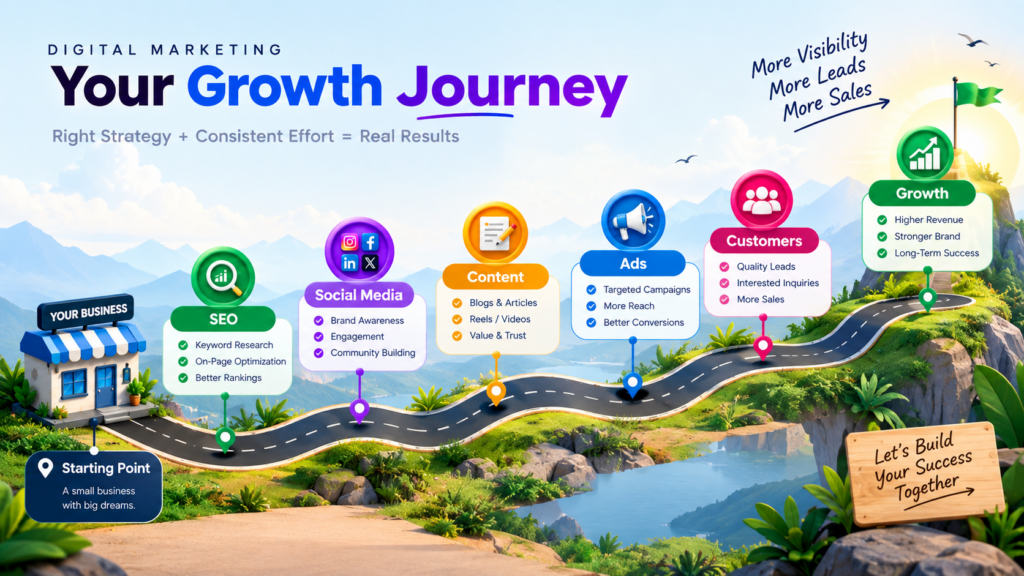
Start with a clear goal, build a useful website, focus on SEO and the right social media platforms, create helpful content, test paid advertising, and track your results.
Most importantly, keep improving your strategy based on what your audience responds to.
For startups, smart and consistent digital marketing can turn a small beginning into long-term growth.